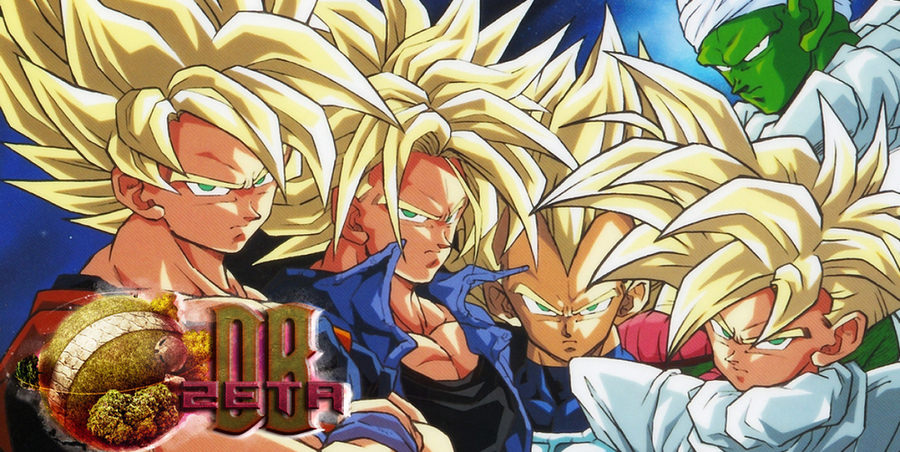
Well, you’re saying a manga needs to have an in-depth psychological exploration as a parameter for being high-level storytelling… which I don’t think is true. It depends on the series. What’s DB’s goal? It’s not to teach people how to live their lives (nor any manga imo) — it’s to be fun and exciting. If you take a Shuzo Oshimi mangas, like that one about the mother and the kid, they also have entertainment as a goal, I’d say (people don’t buy unless they feel entertained in some way), though they do so through reflection — through a psychological feel for the scenes. Different stories have different purposes.
Still, it’s not as bland as you imply. You can get a psychological reading on most characters from Dragon Ball, but they come through subtle moments. When Mr. Popo talks about Piccolo landing on Yunzabit with the spaceship and waiting for his parents for years, he says Piccolo must have felt really lonely. In fact, Piccolo cried when he was about to die, saying Gohan was the first person who spoke to him as if he weren’t a monster. That’s a subtle but effective way to show he felt a deep disconnection — loneliness — and that he embraced humanity’s evil nature as a way to validate the gap between himself and humans, filling that pain with a sense of superiority to explain why he was the outcast, by ruling over them.
When he offered Vegeta help after Cell’s defeat and Vegeta said, “Get lost, I don’t need your help, just go,” and Piccolo smirked and replied, “Ok, as you wish,” — Piccolo had seen that Vegeta had feelings, snapping when Cell killed Trunks, attacking SPC while losing his mind, and helping in the last moment with a blast that threw SPC off balance. He understood that Vegeta had a soul and a harsh upbringing, something Piccolo might have related, somewhat, to from before he joined the Z team fully. Piccolo also had an ego before — like his rivalry with Goku — until he let go of his desire to be the strongest. Once he saw Vegeta as someone who had a soul but was struggling, he likely understood Vegeta as someone going through the pain of accepting that he had lost his rival Goku, who died after surpassing him. Hence, his offer of help was almost rhetorical — more like saying, “I get how you feel.” In fact, when Piccolo left, Vegeta was furious that Goku had died, because he had lost the purpose that defined him. That was soul-crushing to him.
In the Boo arc, when Piccolo asks Vegeta, “Are you planning to die?” and Vegeta asks whether he’ll see Goku in the other world, Piccolo answers, “I’ll be blunt, but that’s impossible. You’ve killed too many innocents without compassion. Your body will be destroyed, your soul will be cleansed of all its memories, and used for another being.” Vegeta replies, “… Hehe, I see. That’s a shame. Well, that’s all. Take the boys and go, Piccolo.” Piccolo says, “Farewell…”
The faces they had — in their last meeting in the series — and the scene as a whole did a great job showing both characters’ psychology and the subtle respect, or understanding, they had for each other, even if there was barely any interaction.
For a series whose highlights revolve around power, about the mystery of dangerous villains, each character’s obsession with strength, and a timeline of events that feel both intriguing and fun like a deeply immersive game — to have these subtle details that reveal psychology and emotion in small but powerful ways, that’s a real plus, if you think about it.